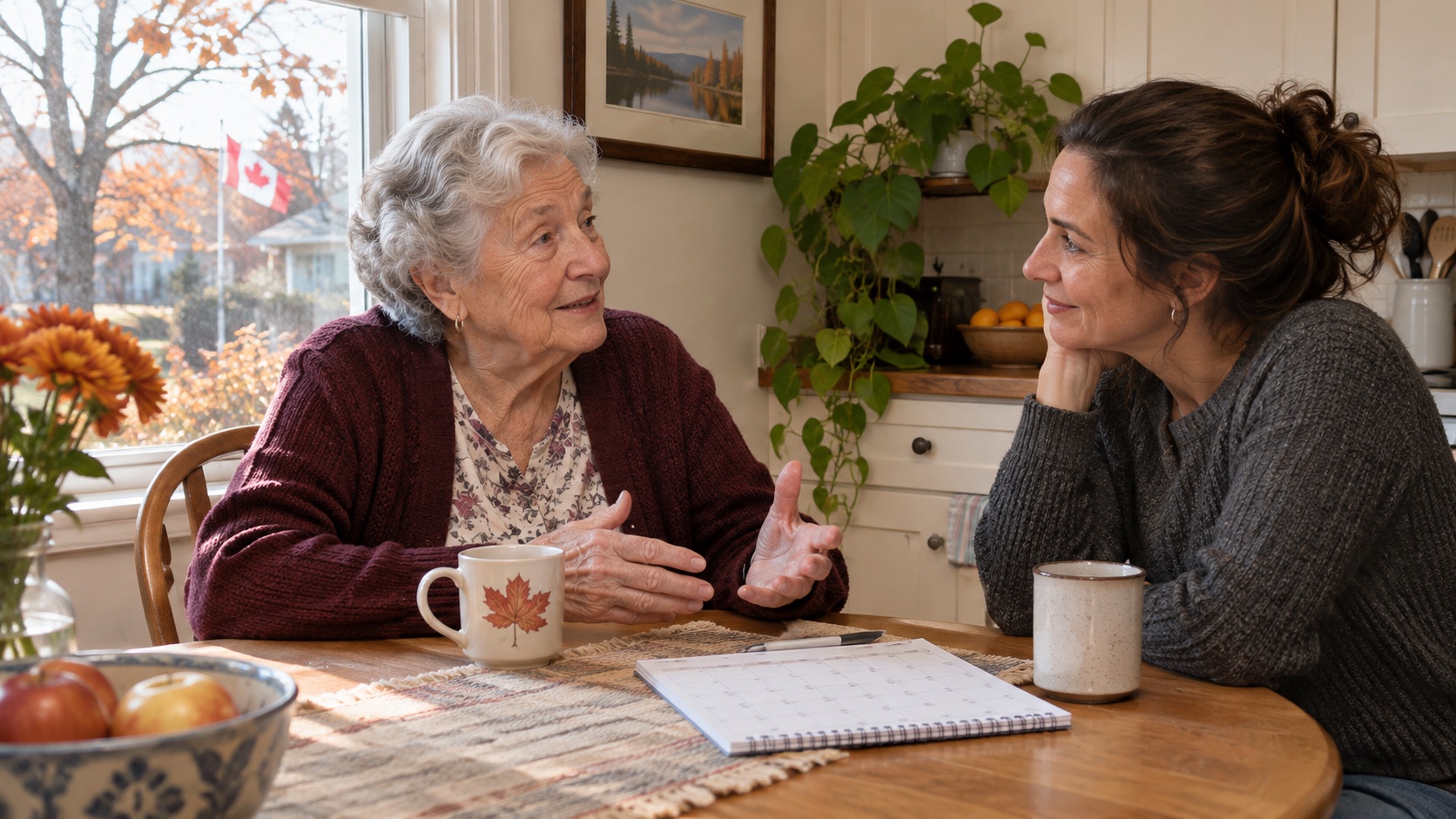
“I would like you to call more,” Ruth tells her daughter, “but I don’t want you watching my kitchen.”
Her daughter had suggested a camera after a morning when Ruth didn’t answer the phone. To her, it sounded like a way to stop worrying. To Ruth, it sounded like having to think about being watched while making toast, talking to a friend or sitting quietly in her own home.
They want something compatible: more dependable contact, with room for Ruth to live her day. The way forward starts by accepting the camera decision and asking a smaller question: what would help them reach each other when they need to?
Take “no cameras” as useful information
If your parent wants support but rejects cameras, you already know something about the arrangement they might accept. You don’t need to keep making the case for a device they have declined. Try saying, “Okay, no cameras. Which part of being on your own would you actually like help with?”
Their answer may be quite different from yours. Perhaps they want someone to help carry groceries upstairs. Perhaps they want an easy way to call without finding a phone. Or perhaps they enjoy living alone and would simply like your regular calls to include more conversation.
Name your concern just as specifically. “I didn’t know what to do when you missed our call on Tuesday” gives you a problem to work on together. “I need to know you’re safe all the time” sets an expectation that neither a family member nor a device can reliably meet.
Keep the discussion about the help they want and the uncertainty you can reasonably reduce. If the disagreement is broader than cameras, helping a parent who refuses help offers another place to begin.
Decide what you actually need to know
A view of the living room would not necessarily answer the question that worries you. An empty room could mean your parent is gardening, visiting a neighbour or reading elsewhere. Before choosing any technology, finish this sentence together: “The update that would help us is…”
For Ruth, that might be a brief call after breakfast on weekdays. For another family, it could be confirmation that the person driving to an appointment has arrived. Those are different needs, and they call for different arrangements.
Start with what your parent already uses comfortably. A normal phone call, a short text or an agreed visit may be enough. Choose a time that fits their life instead of turning their morning into a deadline set around your workday. If they leave early on Wednesdays, make Wednesday different.
Then discuss what happens when the usual contact doesn’t happen. Ruth might agree that her daughter will try calling again and, if they still cannot connect, contact a nearby friend who has agreed to help. Write down names and phone numbers where both can find them. Choose timing together around the circumstances; there is no universal waiting period that makes every situation safe. If you already have reason to suspect an emergency, contact emergency services directly.
Our article on checking on aging parents without constantly calling can help turn that conversation into an everyday routine.
A camera-free device still needs a privacy conversation
“Without cameras” does not mean “without personal information.” Location, routines and responses can reveal parts of someone’s day even when there is no video. The Office of the Privacy Commissioner of Canada recommends checking what a smart device collects and which privacy controls it offers before buying.
Make the discussion concrete. Would your parent be comfortable with you knowing that a planned check-in went unanswered? Do they want their sibling to receive the same information? Would they feel differently about sharing location? Do not bundle those choices into a single “the family needs access” decision.
Sit together when reviewing settings. Explain an unfamiliar term, then let your parent respond before moving on. A useful question is, “Would you still choose this if I weren’t hoping you would?” Leave room for a genuine no, including after a trial of a new routine.
The Commissioner’s wearable privacy guidance also recommends reviewing privacy settings regularly. A relative joining the care arrangement is a good reason to revisit access together, rather than assuming everyone should see everything.
Where the Simone Watch could fit
If your parent wants calls and a planned check-in without video, the Simone Watch is one option to consider together. It supports two-way voice calls, not video calling. Simone can alert family when a chosen daily check-in goes unanswered; that alert needs follow-up and does not establish an emergency. A completed check-in is not continuous supervision.
Review the sharing choices and missed check-in answer together. Family access should match the wearer’s wishes and each person’s agreed role. The watch also needs charge and the required connection; keep another way to contact someone when it is unavailable.
If you discuss SOS, keep the response arrangement clear: it reaches chosen contacts, not 911 or a staffed response centre. The SOS FAQ explains the sequence. Simone is currently available for preorder, so it is not an immediate answer to a support need today; check availability before ordering.
Give the new arrangement a review date
Try the agreed contact routine for a week, then talk about what it felt like. Did your parent find it helpful? Were you repeatedly interrupting something they enjoyed? Did the backup person actually understand when they might be called?
Ask what could be reduced as well as what might be missing. Ruth may like a weekday morning call but want Sunday left open. Her daughter may discover that knowing whom to contact after a missed call matters more than receiving more updates.
If the real problem is help with meals, bathing or getting around, contact arrangements alone will not do that work. Discuss practical local support with your parent. More information on your phone does not create another pair of hands at home.
A good outcome is an arrangement your parent can describe in their own words: “We speak after breakfast. If we miss each other, we know what to do.” Then you can spend more of that call hearing about their day, and less of it checking that the plan exists.