Six-thirty in the morning to lights out, with Simone in the house.
Every moment below is something Simone does today. Watch how much of an ordinary day looks after itself, and how little of it needs to land on you.

The watch has been up all night.
Margaret hasn’t. The watch read her sleep and her resting heart rate while she slept, and stayed on its own 4G line the whole time, so nothing depended on a phone being charged or nearby.
“Good morning, Margaret.”
Simone says hello, and mentions the rain due after lunch, because the watch face shows the forecast and Margaret likes to know before she chooses her shoes. A short conversation, or none at all; either way the family gets one line.

The first dose, marked with a tap.
The reminder shows on the wrist and Simone says it aloud. Margaret taps “taken”, and the family can see it was marked. If the tap doesn’t come, Simone asks again before the family is told.
“Is it the dentist today or Thursday?”
Simone knows the plan for the day because the family put it in the shared calendar. Thursday, and the ride is booked. She answers, and says who is driving.
Lunch, and a word about water.
A reminder that fits the person: she skips lunch when she’s reading, so Simone mentions it. The rest of the day’s routine, meals and all, came from one conversation the week the watch arrived.
A walk to the park.
The watch knows where she is. The family app does not show a dot moving across a map all afternoon, because nobody needs that. If someone asks, the location is there. If something happens, it is there in the alert.

Home again.
The watch notices its own connection at home and marks her back. Steps for the day are counted against her usual, not against a target someone else chose.
A quiet day gets a nudge, not an alarm.
On a day with no walk and no conversation, Simone checks in herself before anyone is worried. If the watch itself has gone quiet, off the wrist or out of charge, the family hears about that too, in plain words, with what to check.
The evening summary.
Three hundred kilometres away, her daughter reads the day in the time it takes the kettle to boil. Then she calls, and the call is about the book, not the pills.
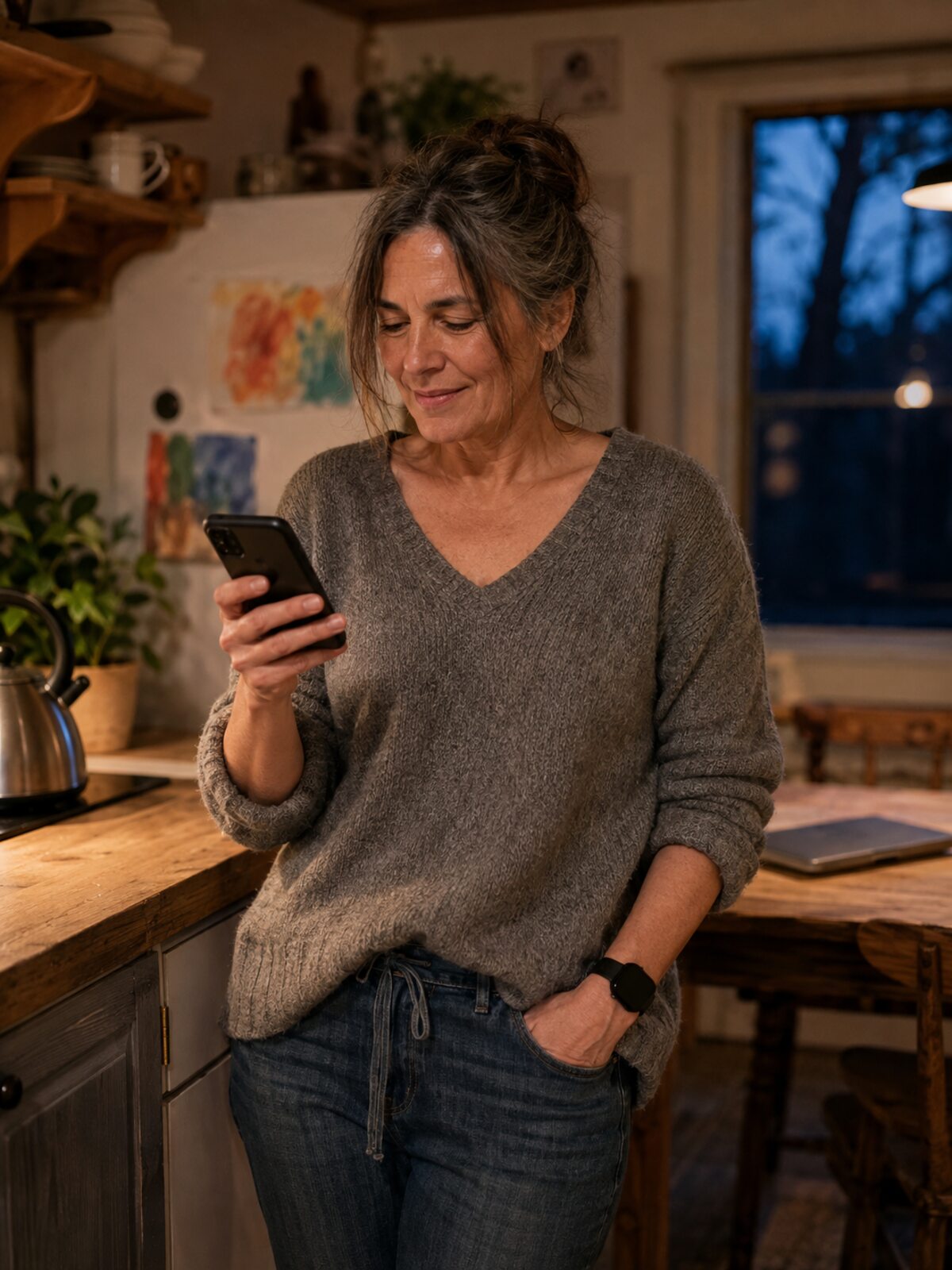
The evening dose, and a call from her son.
The second reminder, marked the same way. Then the watch rings: her son, on the drive home. Only the family list can call in, so the wrist never rings for anyone else.
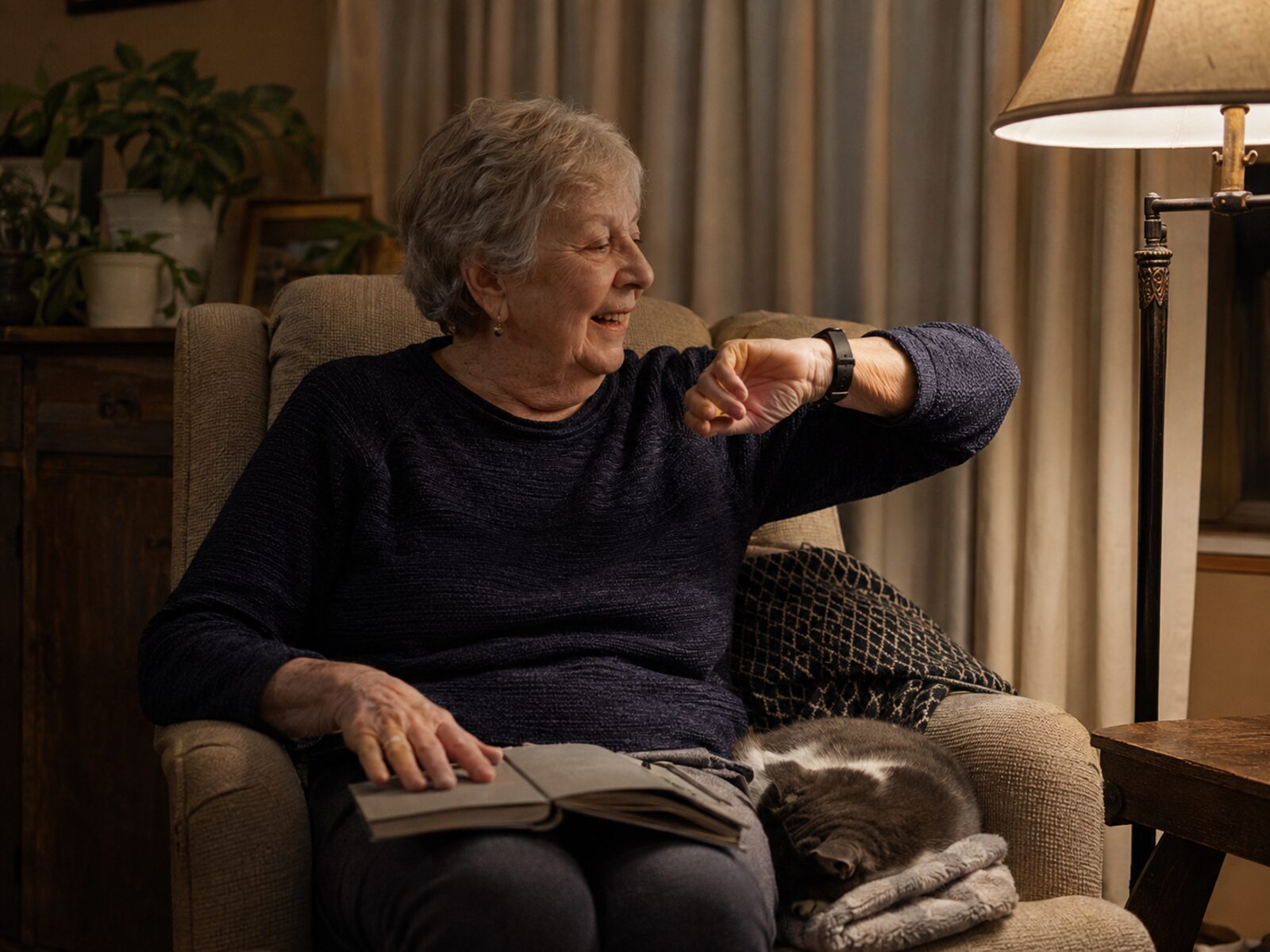
The part nobody sees.
Each night Simone compares the last few days to Margaret’s own last four weeks: resting heart rate, steps, blood oxygen, nights with too much movement. Most nights there is nothing to say. When there is, the family gets a plain description of what changed and a suggestion to mention it at the next appointment. Not a diagnosis. Simone is not a medical device.
Any time: the SOS button.
Held for a moment, the watch rings the family one after another, twice around, until someone answers. It’s a real call, on the watch’s own line, and the app alerts everyone at the same time with live location. SOS calls the people you choose; it does not call 911.
Any time: a hard fall.
The watch detects it and alerts the family with location. No detector catches every fall and some ordinary movements can look like one, so the app asks afterwards whether it was real, and every answer helps us tune it.
Give someone you love a day like this.
Preorder Simone: $199 CAD for the watch with 4G service included, then $49 CAD a month. First month on us. Ships from December 2026.
Preorder Simone